JEROME M. ‘JERRY’ BORIS
3198th Signal Service Battalion
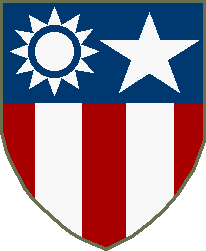
China-Burma-India Theater
of World War II
A Daughter Looks Through Her Father’s
World War II Military Photo Album:
A Journey to Mongolia and Back
Jane Hanser
SCROLL DOWN TO VIEW STORY AND PHOTOS
|
My dad, Jerome Boris, known familiarly as “Jerry,”
was proud of his military service. He had served in the
Asiatic-Pacific Theater. But he knew, in stunning detail,
the history and the politics of both fronts of World War
II, and for the rest of his life let those be known to any
who would listen.
For most of his life, he kept and cherished his vast
library of books and CDs on American military history.
He also kept his photo book of his time in the service,
which I used to ask him about, and one day he extended
me a great honor – and responsibility – when he handed
it to me with the words,
“I’m entrusting this book to you”. . .
|
|
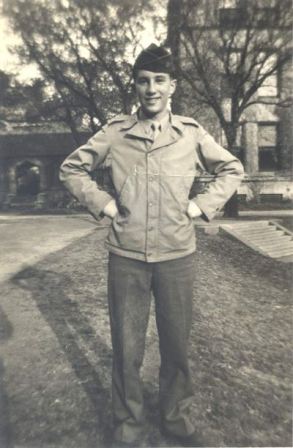
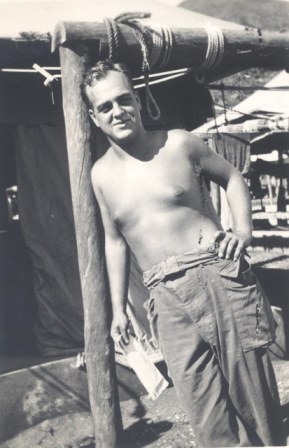
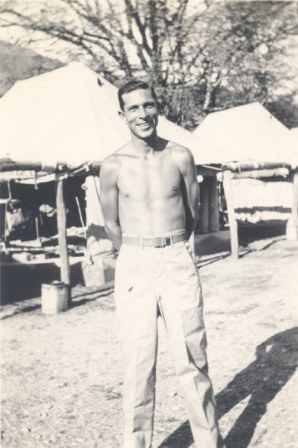
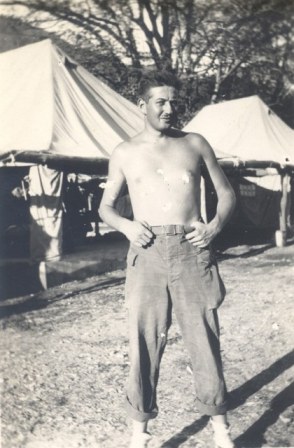
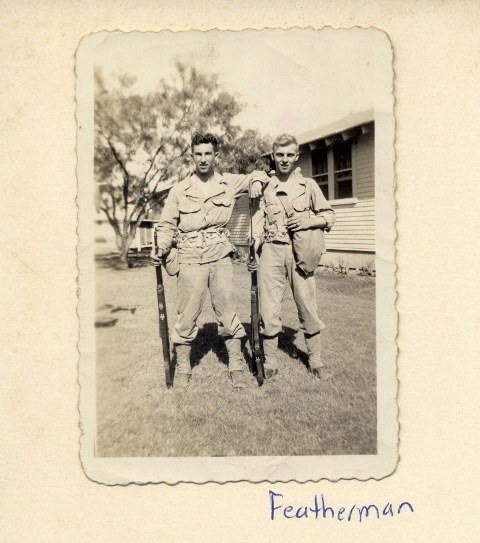
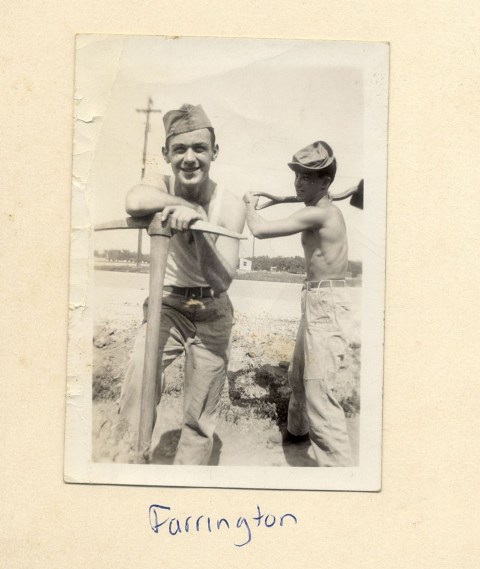
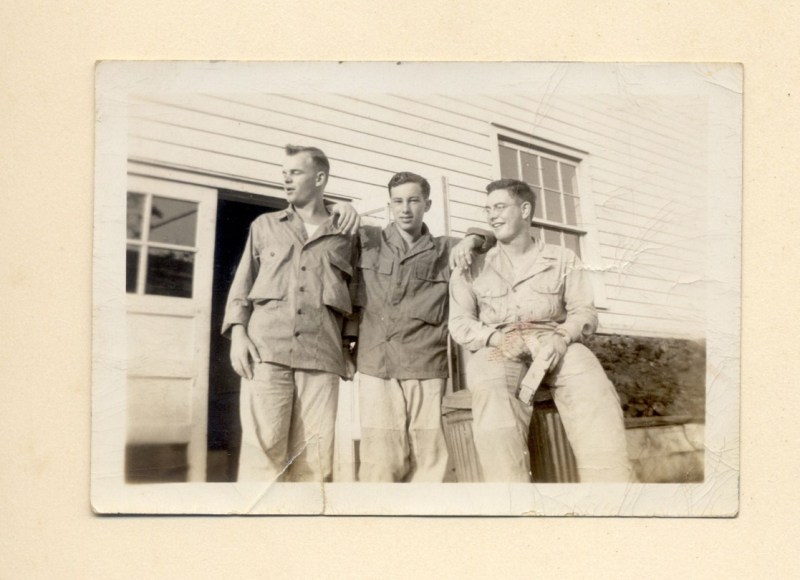
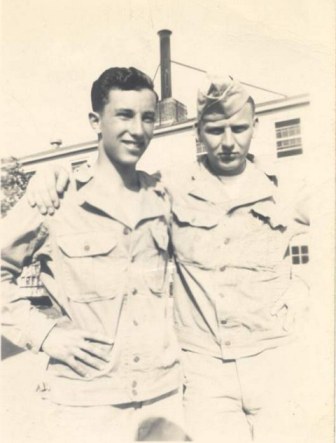
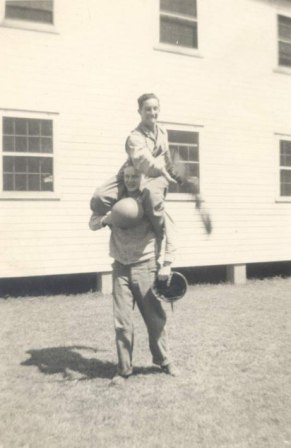
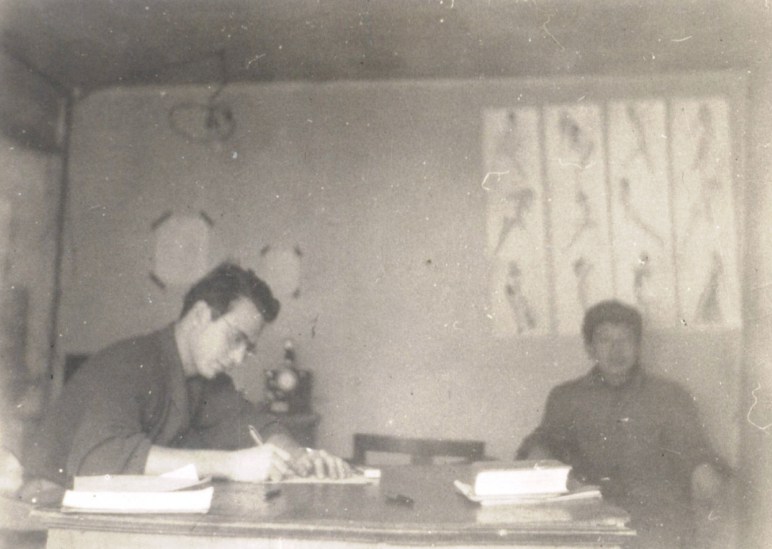
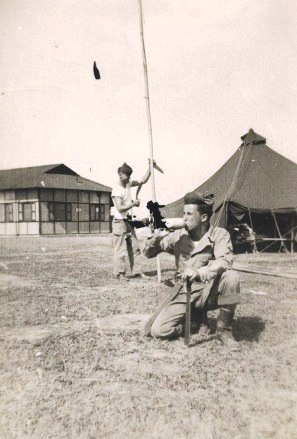
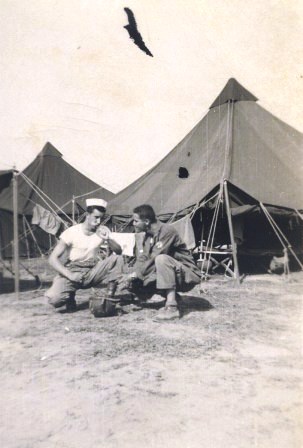
. . . I’d been able to attach names to photos of one of the servicemen and, fortunately, found his son on the internet, and sent him photos of his father horsing around with my dad, which he was very grateful for. He told me his dad had been in India; the images look as if they were taken at Camp Crowder.
My Dad told me he had served in India and China; he also told me he served in Mongolia and how fond he was of the Mongolians. About India, he told me of the heat.
Over the years, I interviewed him numerous times about his service, and this photo album was sometimes a source of my questions. Then people started telling me that Americans did not serve in Mongolia. It’s pretty clear that he was right about the heat in India….
One day when going through the photos, Dad said, “These are in India. Oh, we handled it, we were in good shape. Yeah, that’s India all right!”
|
If you recognize any of these men, please contact me .
|
Growing up, I often heard him bothered and vocal about the German-Soviet Molotov–Ribbentrop Pact, the “non-aggression” pact, referred to also as the Hitler–Stalin Pact, that, after being signed, allowed Hitler to run ragged over much of Europe and Africa; my dad was forever troubled that humankind had not learned or applied any lessons from that greatest of tragedies, not learned what history taught us.
After Dad passed in 2019, I was present at a local Veterans Day event that honored those who served; individuals who had served, or the children of those who had served, in any war or battle in which the United States was asked to speak. I spoke about my Dad’s service, and afterward I heard again: “I didn’t know American servicemen were in Mongolia.” Once again. So this year I applied to the National Archives for his DD-214 —the “RED BOOK” — his complete service record, to learn the precise locations and times when he had served… I’d had recent success obtaining the Red Book for my maternal grandfather’s World War I service. I was enormously disappointed to read the response that my dad’s record of service – and the records of as many as 18 million mostly Army and Air Force servicemen and women - had tragically been destroyed in the 1973 fire at the National Personnel Record Center in St. Louis.
|
|
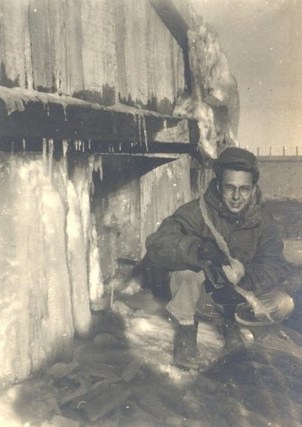
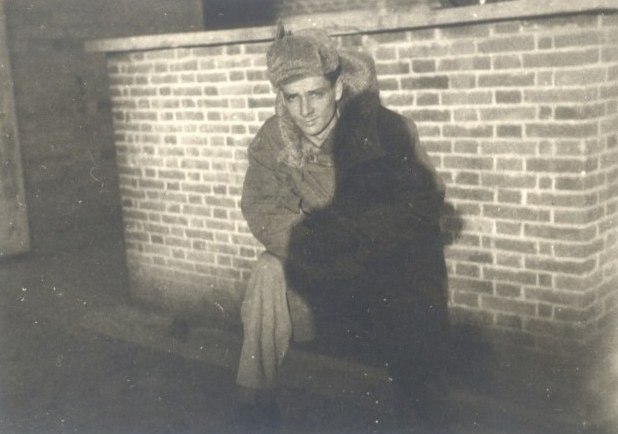
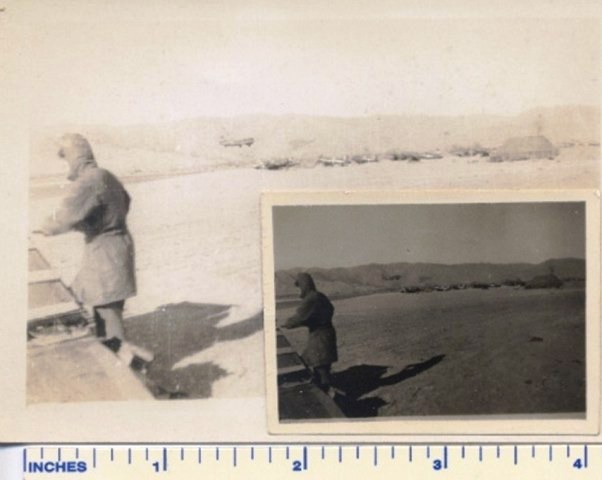
My dad’s discharge papers, which I had, showed he’d been awarded medals — medals that he said were “no big deal.” In his photo album were faded 3 x 6 black-and-white photos and tiny 2-1/4” x 1-3/4” photos, all of which appeared to have been taken in India, China, or Mongolia. When I realized that the larger images were reprints of the tiny ones, I paired them and scanned the tiny 1” x 1-1/2” photos in high res – and these revealed fascinating details that drove me to dive anew into the world of the Asiatic-Pacific Theater during World War II and the true stories behind these photos.
|
|
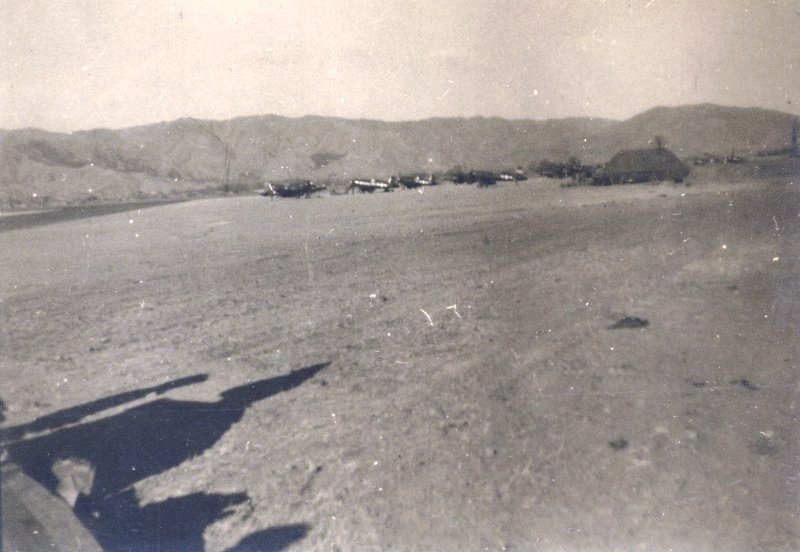
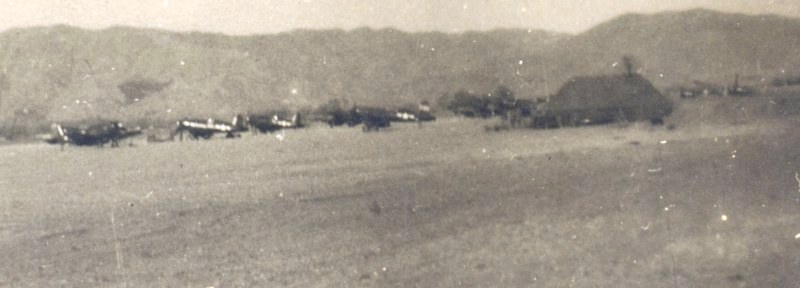
What had appeared as a blurry washed out background revealed itself to be an expansive desert backed by a long mountain range, which I believe now to be a lower-elevation section of “the Hump,” that long ridge of the Himalayas that stretches from Assam, India to Kunming, China and allowed the Allies to fly supplies from British-controlled India to Chang Kai-shek’s Nationalist government of China and enabled them and the Chinese to fight and resist the Japanese. What appeared to be a smudge turned out to be numerous airplanes—and an airfield!
|
Below: Cropped section of the above photo, focus on the airfield
Focusing on the airplanes, you can clearly see the United States insignia. These are not bombers; they are supply planes. But these planes are too numerous to be bringing supplies just to this one military outpost. |
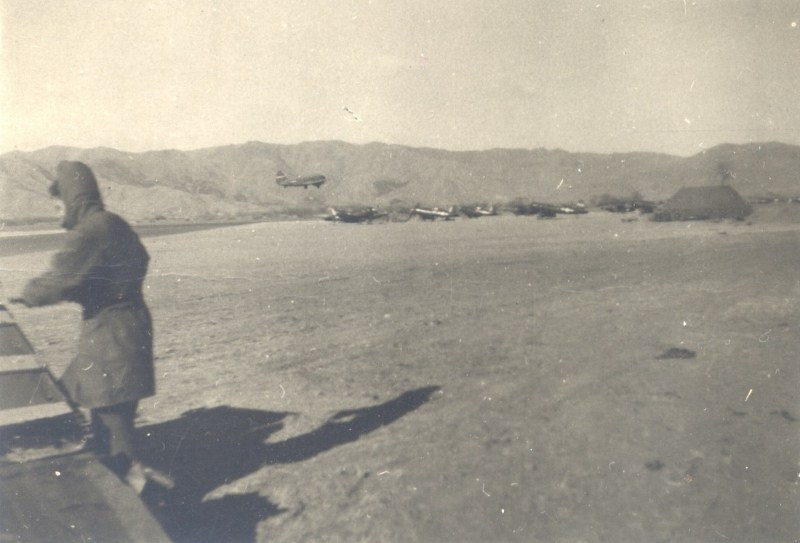
Airplane taking off, mountain ridge to one side. What’s he examining? A crate of some sort (of supplies…) |
|
|
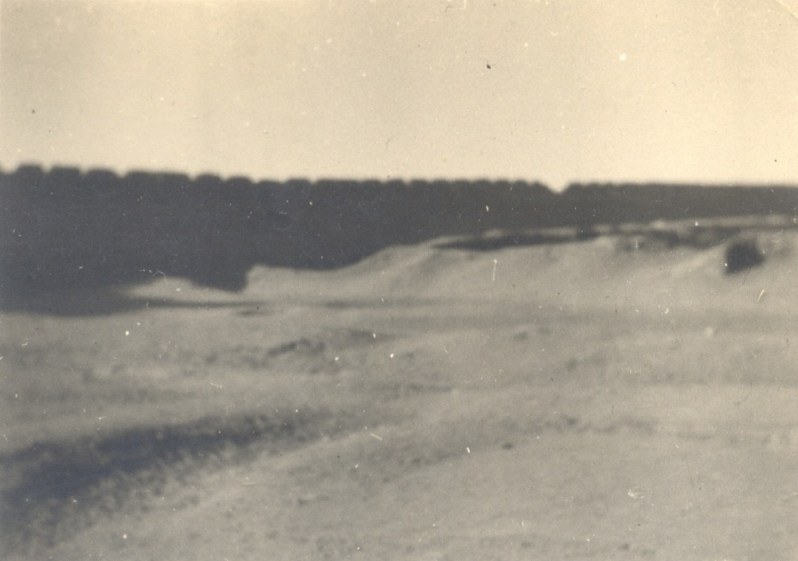
The edge of the airstrip, against a tall wall
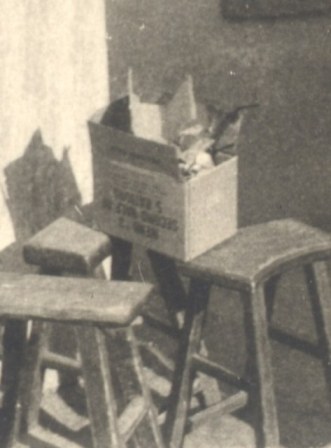
A plain carton revealed itself to be a box of U.S. Army rations, “Menu 3 Second Half of 5 Rations”.
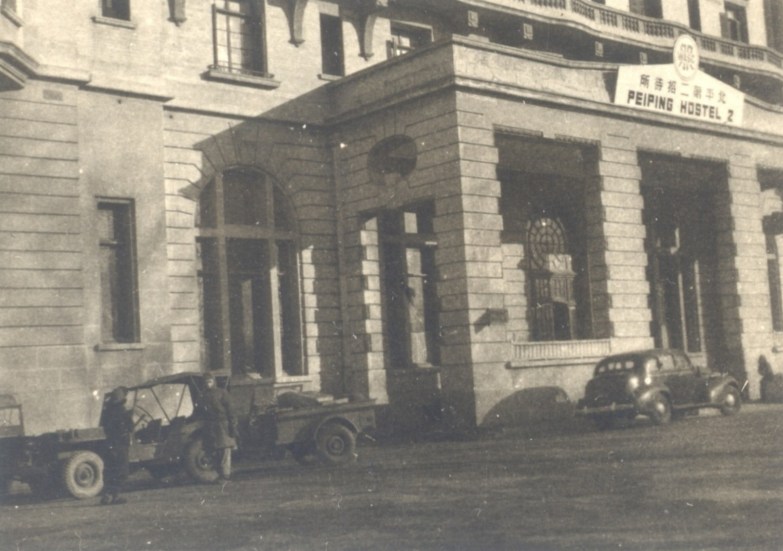
A nondescript building with some Chinese writing over the portal became the Peking Hostel 2, in Peking, where (what happened).
And on it went.
And on it went.
[More photos ahead.]
|
No doubt when my dad said “Mongolia,” he was referring to Inner Mongolia, at that time officially the Inner Mongolia Autonomous Region, an autonomous region of China. Its southern border is two-thirds the length of China's border, and its northern border lies along the country of Mongolia (i.e., Outer Mongolia) and a small section with Russia.
In 1953, the film Destination Gobi, based on a Sino-American Cooperation Organization (SACO) effort of 1945, was released and set in Inner Mongolia's Gobi Desert. The true story the movie was based on involved Americans who were trying to get a leg up on weather predictions in order to relay them to the Pacific Fleet to more effectively fight the Japanese. Of the SACO camps, Camp Four was closest to the border with Inner Mongolia, Camp Eight slightly further east. Although the majority of the American SACO forces in Inner Mongolia were Air Force, some Navy, some Coast Guard, and a small number were Army. But both camps were significantly larger than what my dad’s photos show. So still, where? The need and desire was to dig deeper.
What was the state of the world when my dad enlisted in the U.S. Army? Roosevelt had in his 8th State of the Union Address, on January 6, 1941, proclaimed four foundational freedoms: freedom of speech, the freedom of worship, the freedom from want, and the freedom from fear. On August 14, 1941, following their meeting in Newfoundland, President Franklin D. Roosevelt and British Prime Minister Winston drafted and declared the Atlantic Charter, a broad statement of U.S. and British war aims. The two leaders and countries remained far apart on substantial issues but agreed about fighting Axis aggression.
December 7, 1941 Japan attacked Pearl Harbor. The following day, Japan declared war on the United States and Great Britain and entered World War II. The United States declared war on Japan, also entering World War II. Japanese troops landed in the Philippines, French Indochina (Vietnam, Laos, Cambodia), and British Singapore. Japan, already at war with China, attacked British, Dutch, and American territories in Asia and the Pacific, such as Burma (now known as Myanmar), Hong Kong, Malaya (now Malaysia), and Singapore. Over in Europe, between December 11 and 13, 1941, Nazi Germany and its Axis partners declared war on the United States. By April 1942, Japan occupied the Philippines, (French) Indochina, and Singapore.
March 17, 1943 A few months over the age of 18, my dad was inducted into the US Army in Philadelphia, PA, and officially entered Active Military Service one week later. He was assigned to Camp Wolters, Mineral Wells, Texas for 16-17 weeks of training. It was an Infantry Replacement Training Center, a location to train new recruits to take the place of those who had died in combat, which must have been confidence-building for the new recruits. It was here that he would likely have become an expert at operating a Thompson submachine gun, a weapon heavily used in the Pacific Thwater. for which he was awarded a badge. But did he ever have to use that submachine gun in combat? A question for the ages.
In 1944, the Japanese Army was launching a series of attacks on (then) British-ruled India with the aim of seizing British supplies in Assam; they also wanted to inspire an uprising by the Indian populace against British rule. With fighting fierce, the British held out against determined Japanese assaults until the Japanese, short of supplies, were forced to withdraw.
The United States and China, under attack by Japan, allied in the hope for a new world order. On June 12, 1944, FDR wrote to (ally) Chang Kai-shek expressing concerns over the movements of Japan, their common enemy, in Central and Southeast China, "Affording Chinese ground forces the maximum of air support.” Will provide “air strength” from Assam (India) to Kunming”. “Until Myitkyina is secure, however, and facilities established there, little additional increase in tonnage over the Hump appears feasible.”… FDR noted the weather in the Kunming area…. “two such fields Kunming… Changkung, “both operated to capacity” “require early completion of a third instrument let-down in the Kunming area.” FDR responded to the Generalissimo’s request for rockets, rocket launchers, and other arms, with the following: “I am therefore hopeful that your government will press the early completion of the field at Luliang.” (Luliang was located on the border with (Inner) Mongolia, on the Yellow River). (Note: “let-down means, in the case of an aircraft approaching an
aerodrome to land,” a defined procedure designed to enable an aircraft to descend safely.”
See more information
HERE
June 15, 1944 Three days after FDR’s communication to Chang Kai-shek, my dad arrived at Camp Crowder, Newton, Missouri, the headquarters of a group of schools established in October 1942, designated the Central Signal Corps Training Center (CSCT), location of the 800th Signal Training Regiment. Their purpose was to provide technical training in radio operations, radio repair, high power station operation and maintenance as a radio operator and repairman, and more. That was the prelude to him serving in the U.S. Army's 3198th Signal Service Battalion in the China-Burma-India (CBI) and in the Pacific theaters.
With Merton Crawford
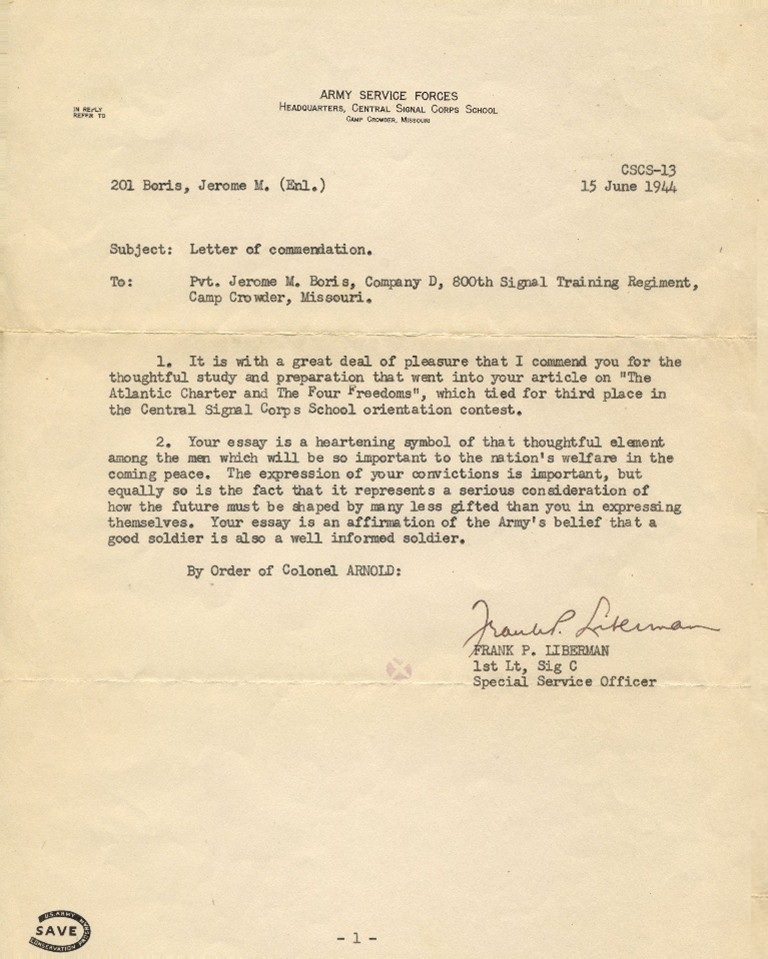
CSCS at Camp Crowder held a contest that my dad entered: entrants wrote papers entitled “The Atlantic Charter and the Four Freedoms.” On June 15, 1944 my dad received a letter from Frank P. Liberman, 1st Lt, Sig c at Camp Crowder: Dad’s paper had tied for 3rd place in the CSCS contest! If I only had a copy of his entry.
CLICK ON THE LETTER TO ENLARGE
The Japanese threat continued, as well as the pressure on often hungry, ill, and poorly trained Chinese ground forces to provide security for American air bases. In July 1944, the U.S. Chiefs of Staff were concerned about security for air bases in China, particularly those supporting the Chinese ground forces east of the Hump. They were also concerned that the Assam line of communication was not adequate to support the air bases sending supplies to China by air over the Hump. Could this be a key to understanding where my dad was stationed and what he was doing?
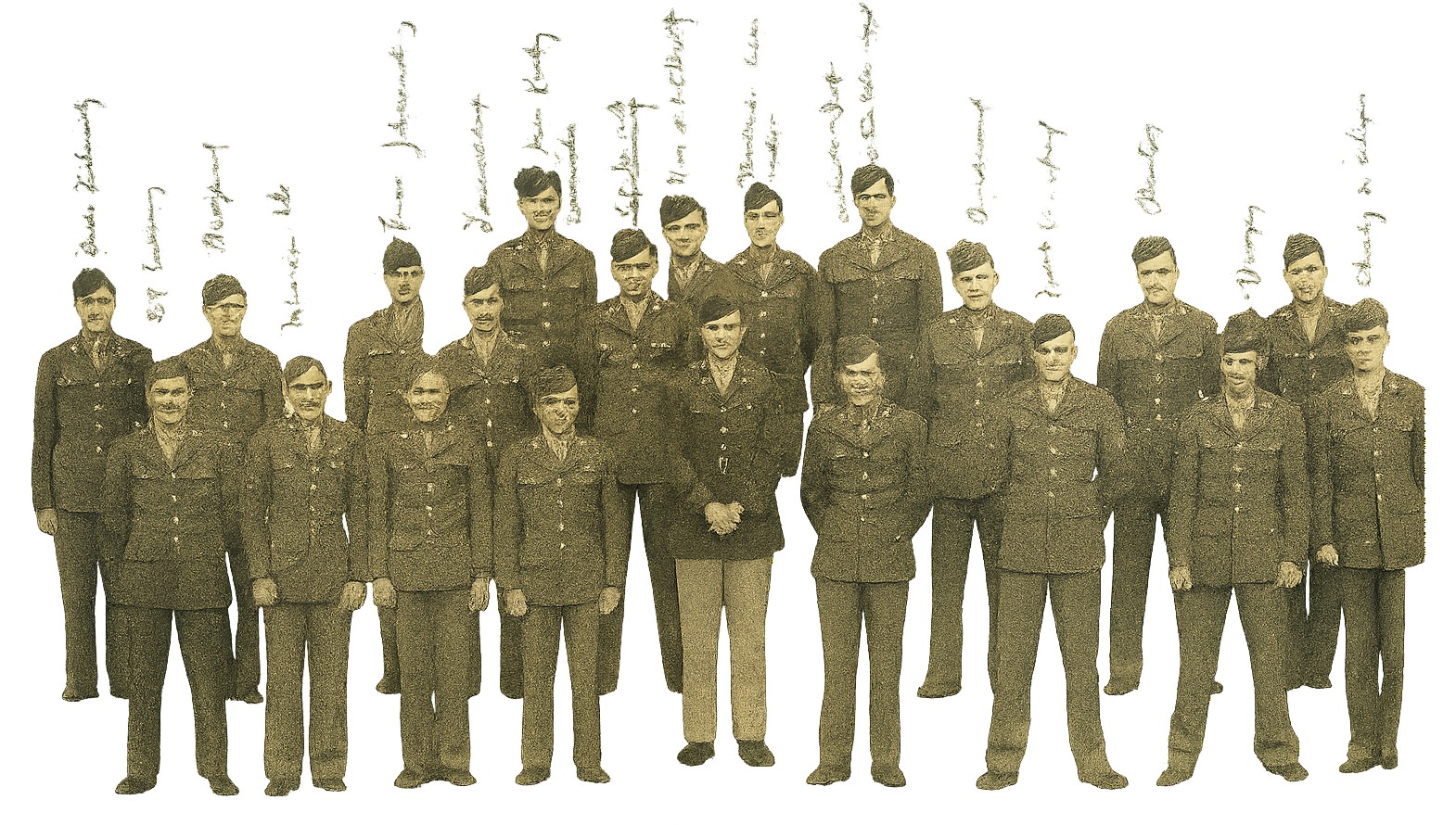
CLICK AI-GENERATED IMAGE BELOW TO VIEW MERGED CLIPPINGS IN NEW WINDOW
|
Jan. 11, 1945 My dad finally left Camp Crowder, headed for the U.S., for the Asiatic-Pacific theater. Reading others’ posts on this CBI-theater website, it was some journey. But what was his next stop? Where were the remaining photos taken?
January 30, 1945 saw the reorganization of American agencies in China and the creation of G-5, which, among other duties, oversaw the improvement of Lend-Lease deliveries over the Hump. In Time Runs Out in CBI, Charles Romanus and Riley Sutherland write, “G-5 also assumed control of clandestine warfare activity within China Theater.” Was the location where my dad was stationed part of these new G-5 clandestine operations? Where was this location along the Gobi Desert, and possibly what is called the lower Hump, mostly in Inner Mongolia, and some distance from the higher altitudes of the Hump? And what was the mission?
Beginning in spring 1945, with the Japanese merchant fleet mostly destroyed and industry bombed, bloody battles occurred to secure Chinese cities from retreating Japanese. One such bloody battle between U.S. troops and Japanese and Japanese puppets (such as Manchukuo) took place at the newly and quickly established Camp Four, located in Shempa, in (Inner) Mongolia, due west of Peiping.
Dale Andrade, in his essay “Every Man a Tiger,” had this to say about Camp Four: “Perhaps the most colorful outpost was Camp Four, located in Mongolia, 400 miles farther north than Tokyo. Camp Four provided the most timely and accurate weather forecasting of any station in the Far East. Storms that raged over the Pacific Ocean originated in Mongolia, so placing a weather station there, upwind from Japan, made perfectsense. Advisers also trained Mongolian cavalry at Shempa for “mobile” operations. In at least one case, U.S. advisers came up with the idea of mounting bazookas on the backs of Mongolian ponies for operations near the Gobi Desert. Camp Four also served as an intelligence center for sending operatives into Manchuria.
Yet there was no indication of a bloody battle, or any battle, where my dad was stationed, and photos of Camp Four show it to be much larger, and luxurious, with its natural swimming hole, horses, oxen and camels, and a medical clinic, compared to the small airfield at the foot of a mountain range where my dad was based, as shown in his photos. Was the airfield where my dad was stationed established to support Camp Four? Or to support the even smaller Camp Eight?
- See more information
HERE
and
HERE
Recent searches of the National Archives, where many communications and documents from that time period are held, are still classified, “SECRET.” I’ll likely check the archives.gov for years for when the SECRET files are declassified.
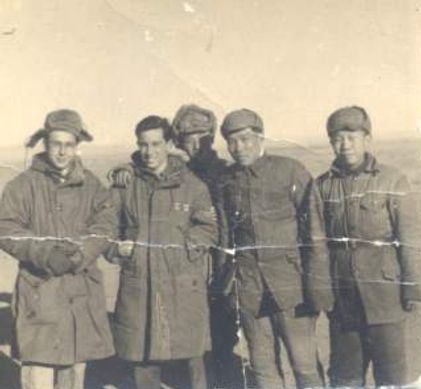
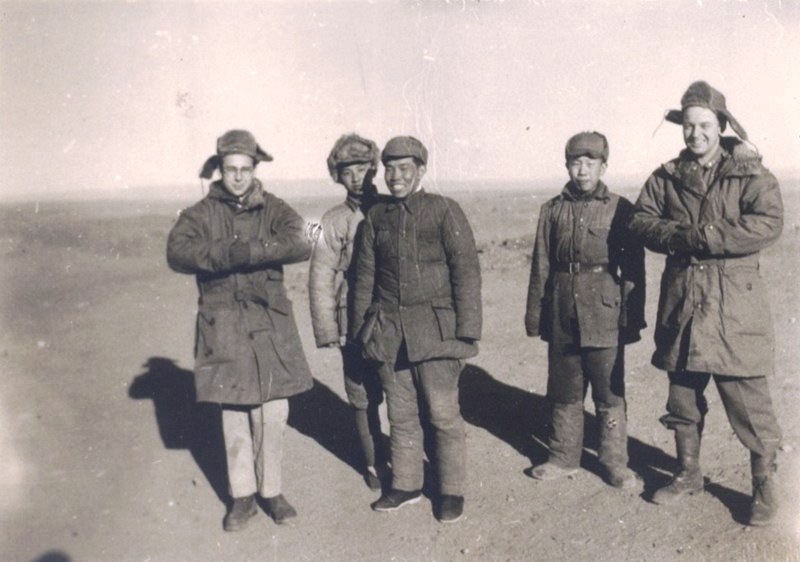
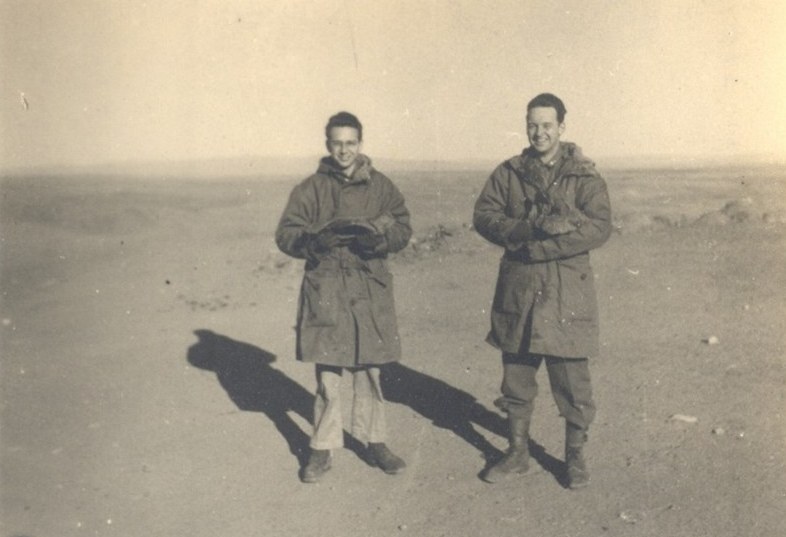
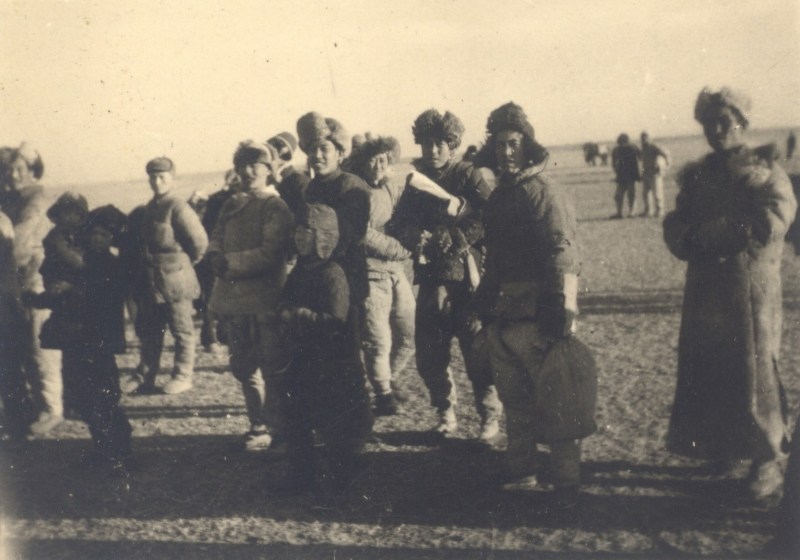
Group photo in the cold of the Gobi Desert.
Note the mountain ridge behind them off in the distance.
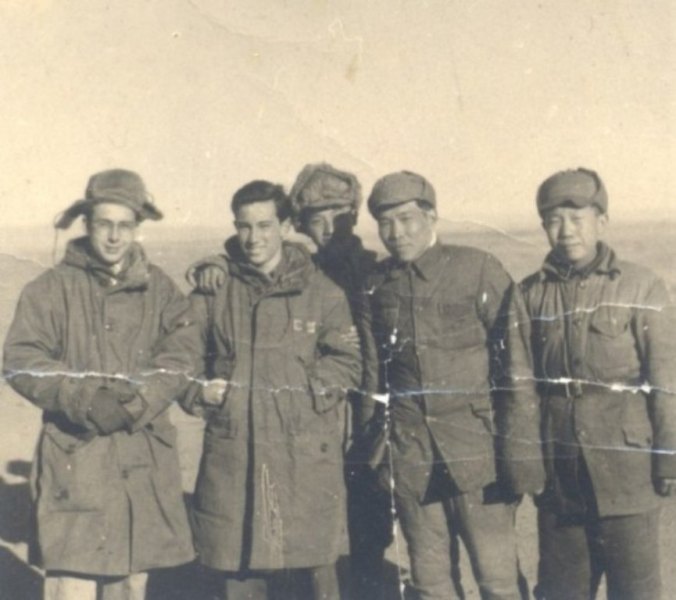
Another group photo.
Second from left, there’s my dad, in the close-knit group.
Mountains in the distance behind them.-
American servicemen - Hats off!
With the mountains in the distant background, mostly Mongolians in this photo; possibly Americans in the background. Possibly some ethnic Chinese, too? Their manner of dress offers clues.
What is everybody looking at? I’d say a plane landing or taking off, but the
mountain ridge is behind this group. Note the long shadows.
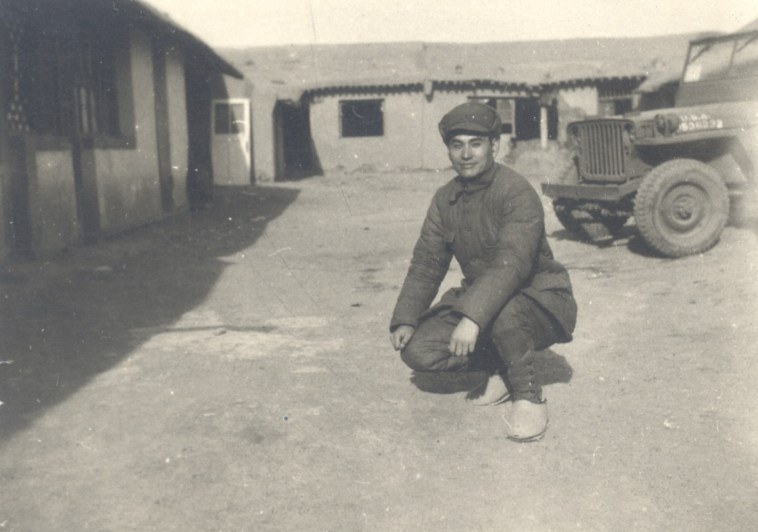
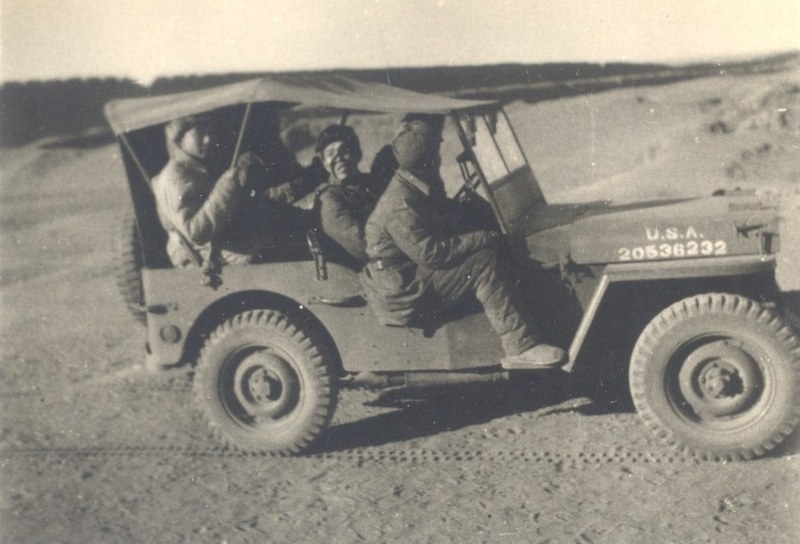
Mongolians – possibly also Chinese – in the U.S. Army jeep. I wish we could trace that
jeep – probably a WILLYS MB – by its number - U.S.A. 20536232 - to geo-locate it. Lend-lease?
And what is that wall in the background?
The Great Wall of China? (Ömnögovi Province Mongolia) Or another wall? Still trying to figure out where my dad was stationed: There were sections of the Great Wall that passed through the Gobi Desert...
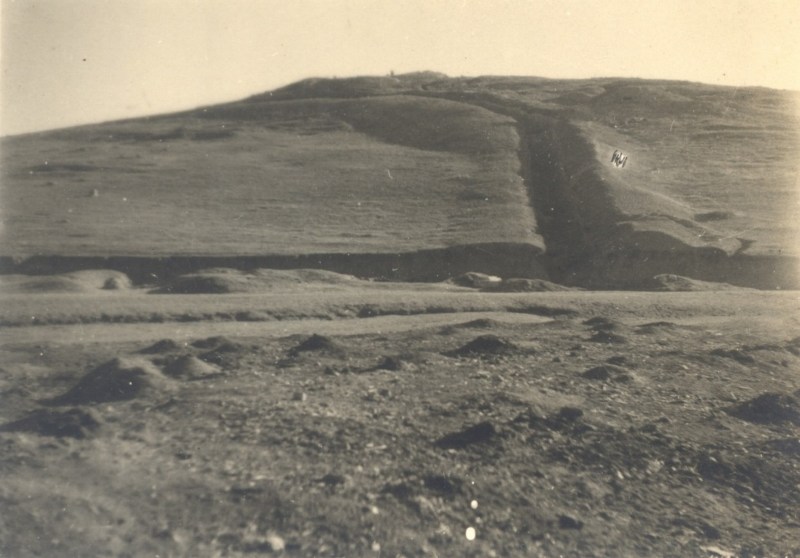
One super puzzling image. Why is there a clearly man-made trench running through this tall hill? Is that a signal tower or a weather station at the top? What or whom is this trench constructed to hide? Any ideas?
Back in the kitchen with its propane tanks...
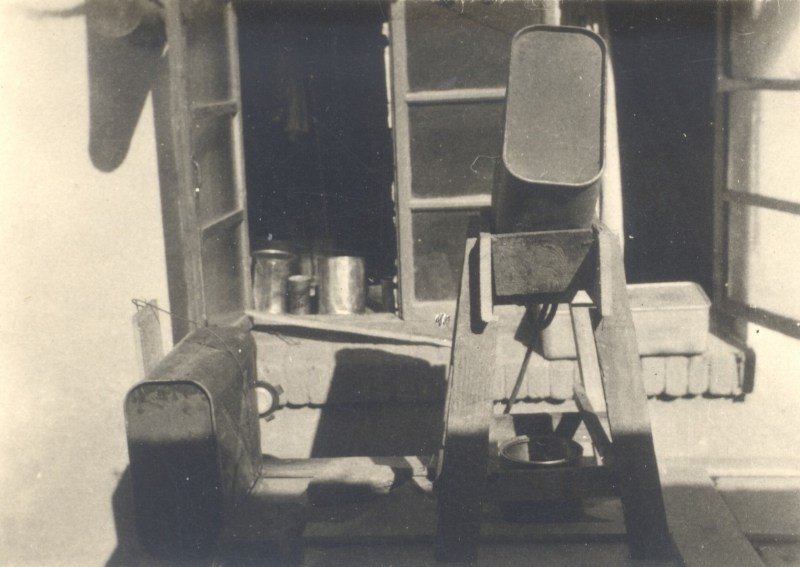
The cook — Welcome!
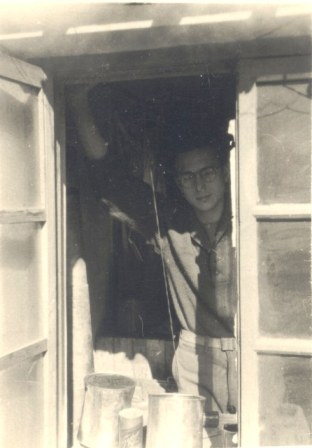
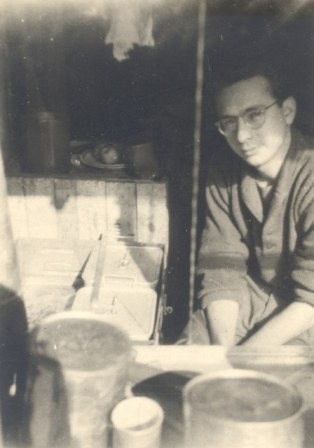
|
|
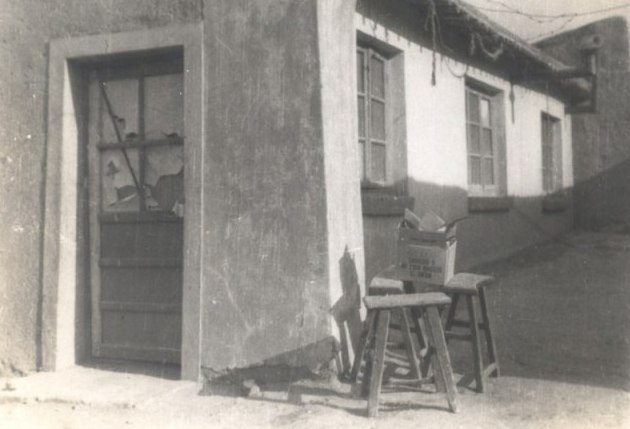
And the empty box of rations outside the kitchen. It says “Menu 3 Second Half of 5 Rations.”
No wonder my father always gloated to me about the delicious Mongolian cuisine and their many courses!
What story can we glean from this series of images, below?
|
|
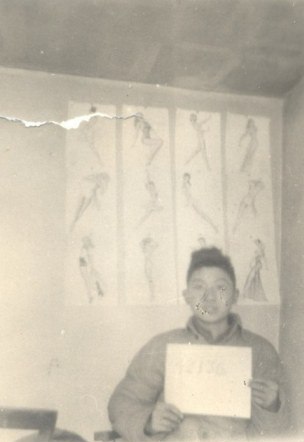
Image 3
Prisoner 42136.
Japanese?
|
|
Camaraderie. My dad was so fond of the (Inner) Mongolians.
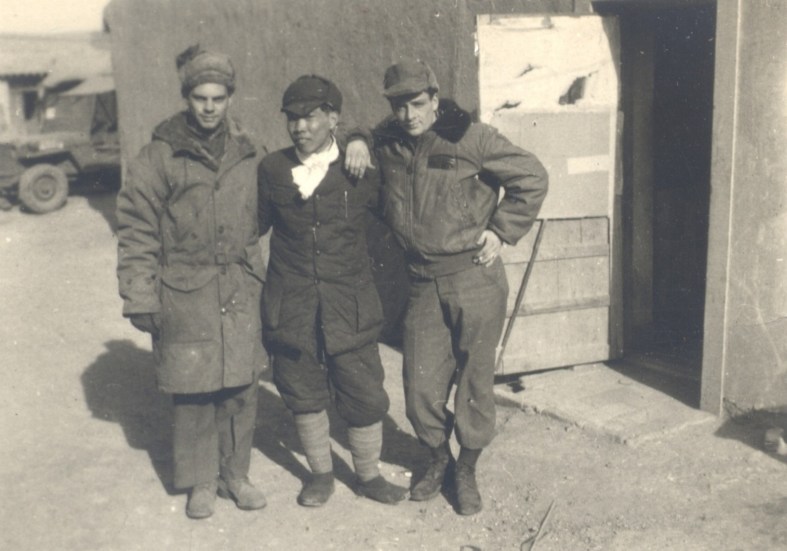
|
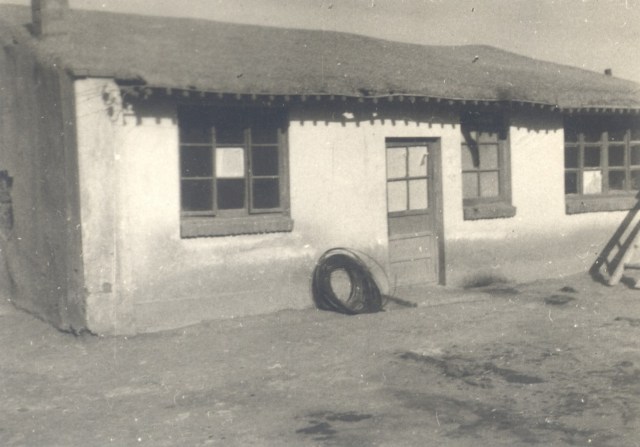
The neighbors and the neighborhood.
Seems the outpost was located in an abandoned community.
Abandoned after attacks by the Japanese?
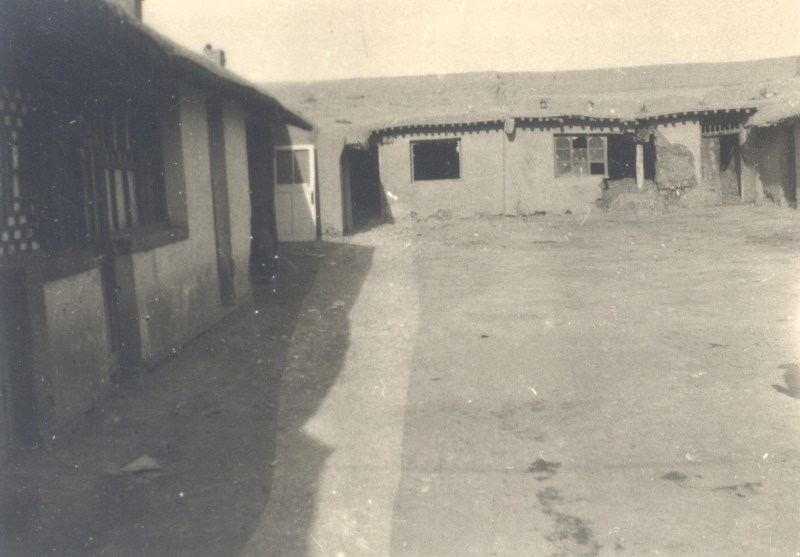
|
Standing outside the kitchen.
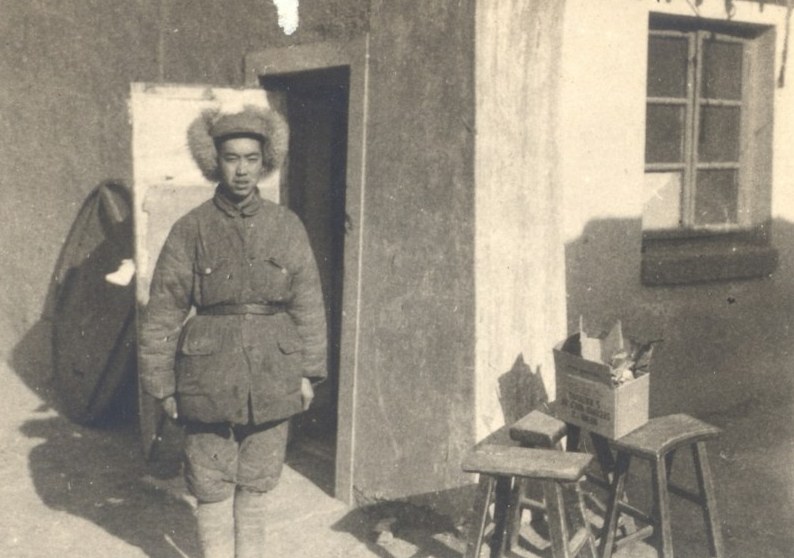
|
|
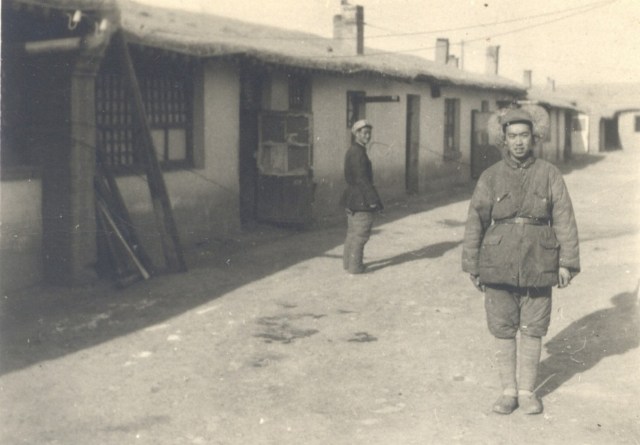
How would you identify the role or position of the man to the left in the dark jacket, facing us, but his body turned
toward the courtyard? The electrical lines running to these structures are visible in this image.
A young man, Mongolian friend of the American community.
|
|
And another.
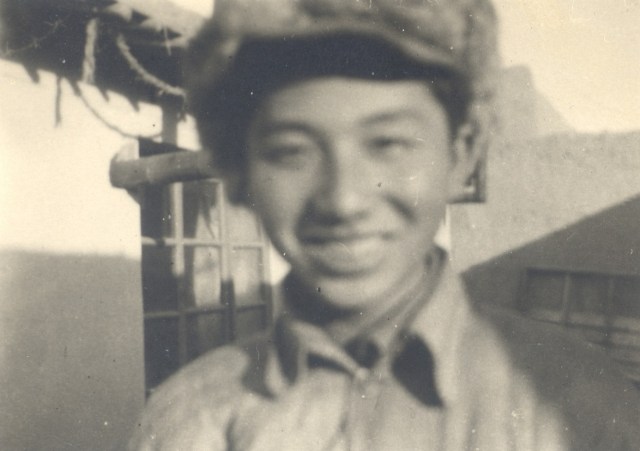
|
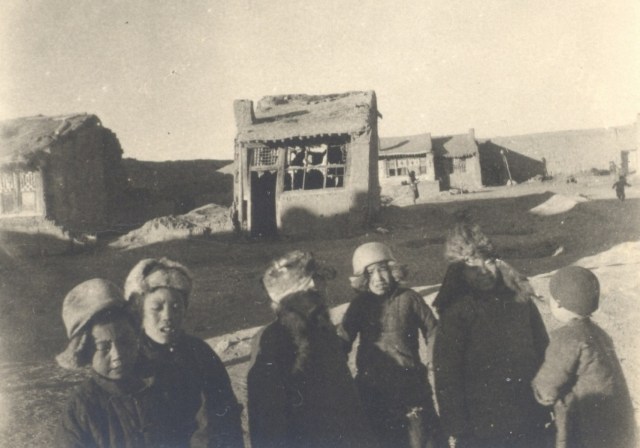
Beyond the village, poverty. What wall is that behind the children? Possibilities are:
The Great Wall of China 2) The exterior wall of Shanghai? Or of another city? Walled cities for protection…
|
Note the newer wall with barbed wire on top. This is not the Great Wall of China but some other, more contemporary.
|
|
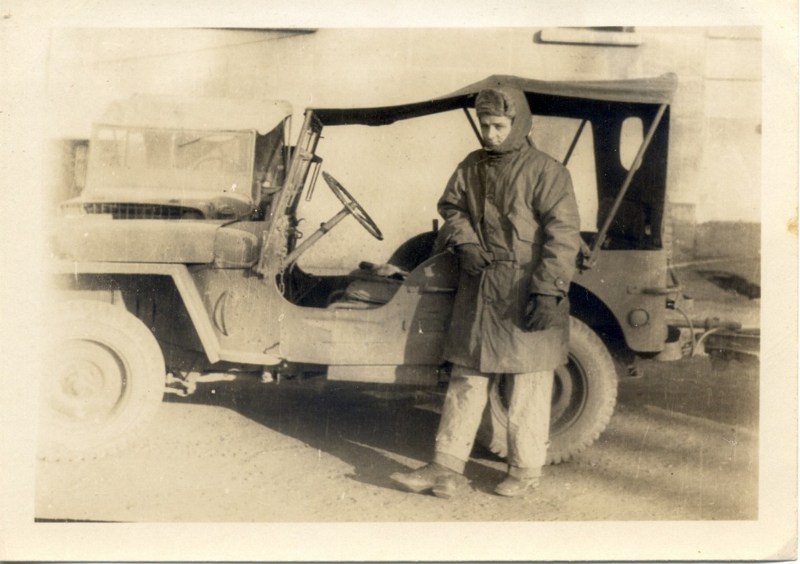
Pretty cold. A lend-lease vehicle? It looks similar to the one in the next image.
|
SERIES OF 3 PHOTOS:
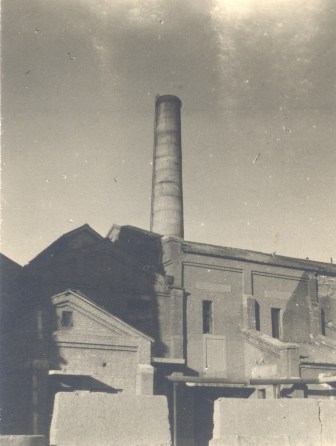
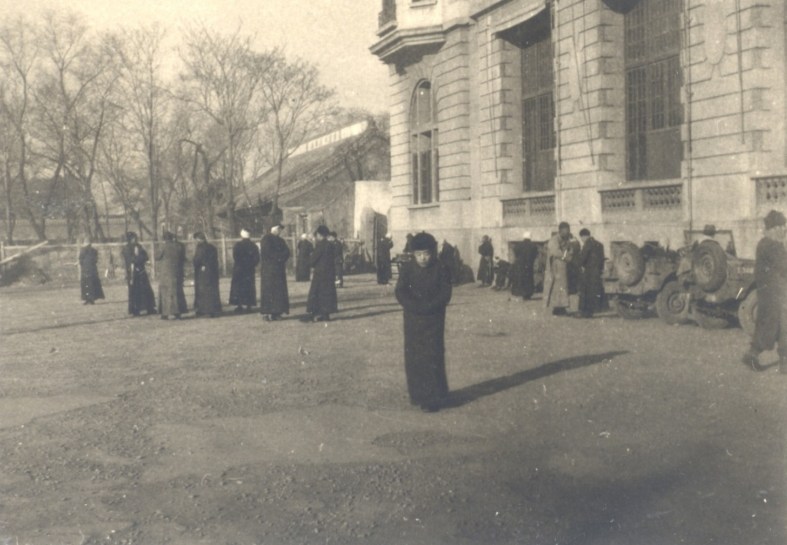
IN PEIPING (Peiping is the former name for Beijing): WASC, War Area Service Council, was a branch of the National Military Council of the Chinese National Government which, since 1942, had taken care of United States Personnel that was in the area. In Peiping, the WASC cooperated with the War Transportation Board of the U.S. Marines, and other organizations.
We know the exact location of Hostel 1, within the Peking Legation Center,
but not that of Hostel 2, which you see in the image below.
If you know where this was located, please contact me .
The wing of this building, outside of the above image, borders a neighborhood.
Standing around, monks?
|
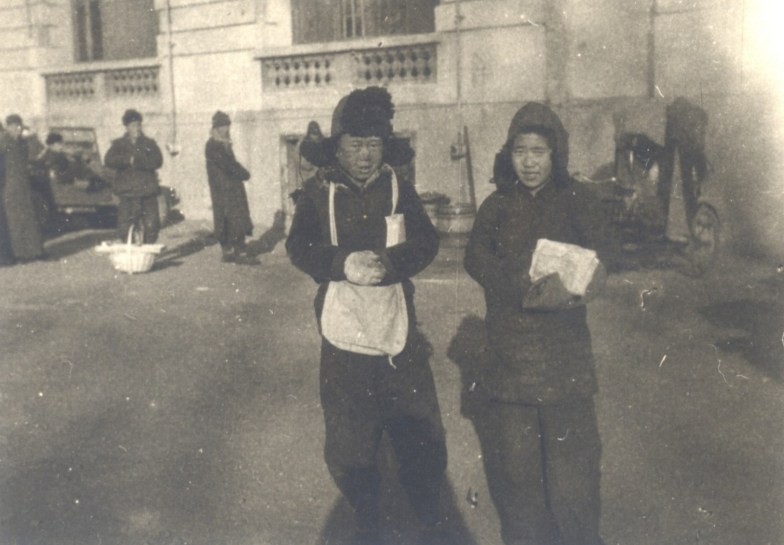
Close up of two children - Mongol and/or Chinese? - in front of the Peiping Hostel 2:
|
These images seem like they show the neighborhood on the other side of the fence above
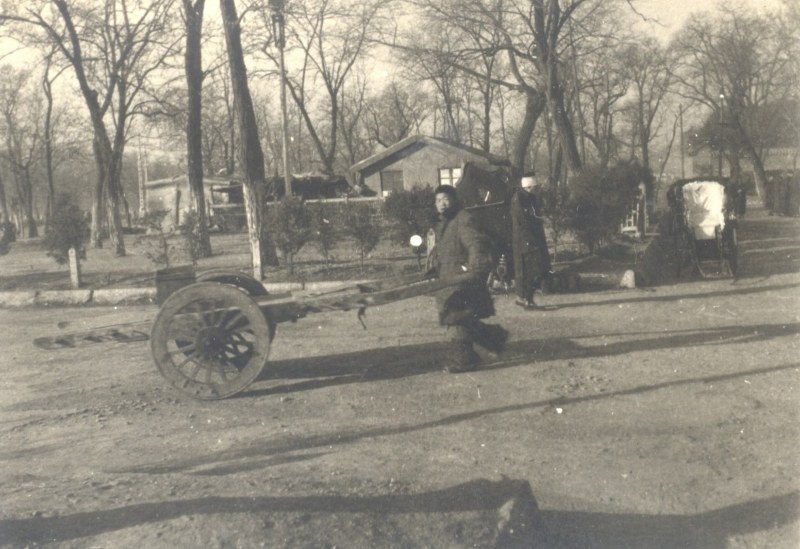
|
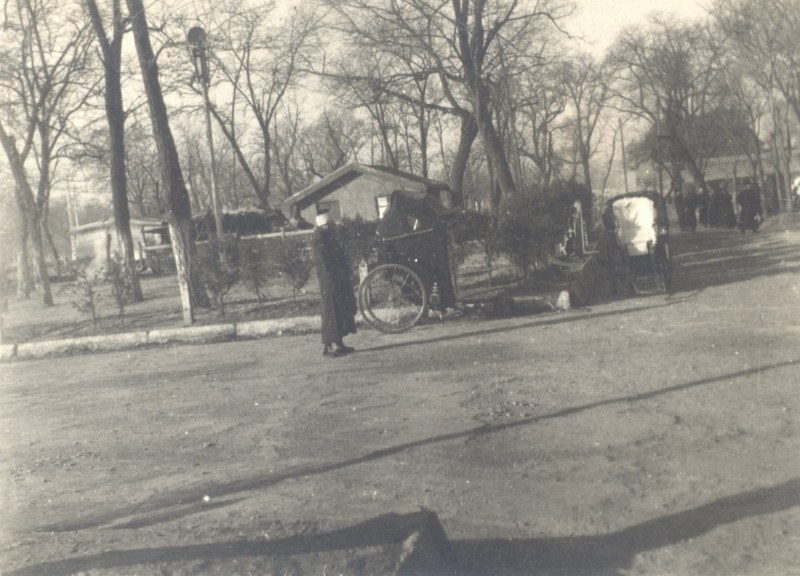
Here we are on a street between two high walls. The gate to one side is visible to the right;
the gate to the other visible further down the road.
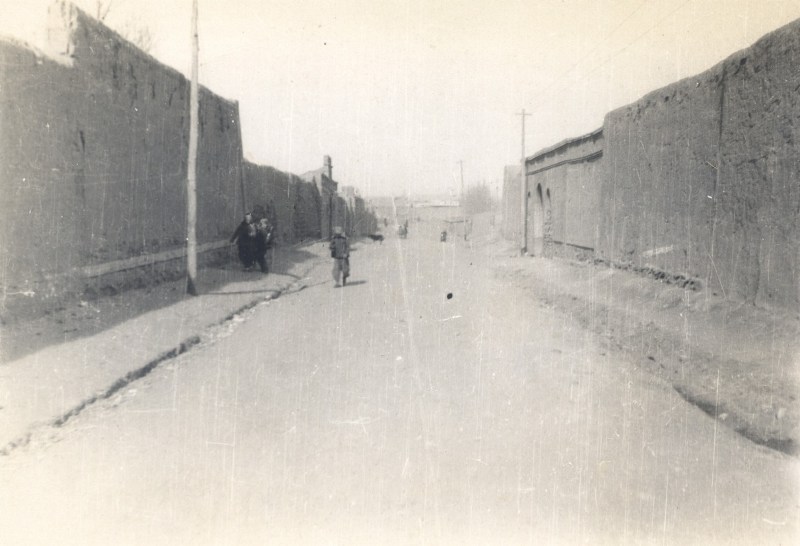
|
A Chinese soldier stands guarding the gateway into one of these walled areas.
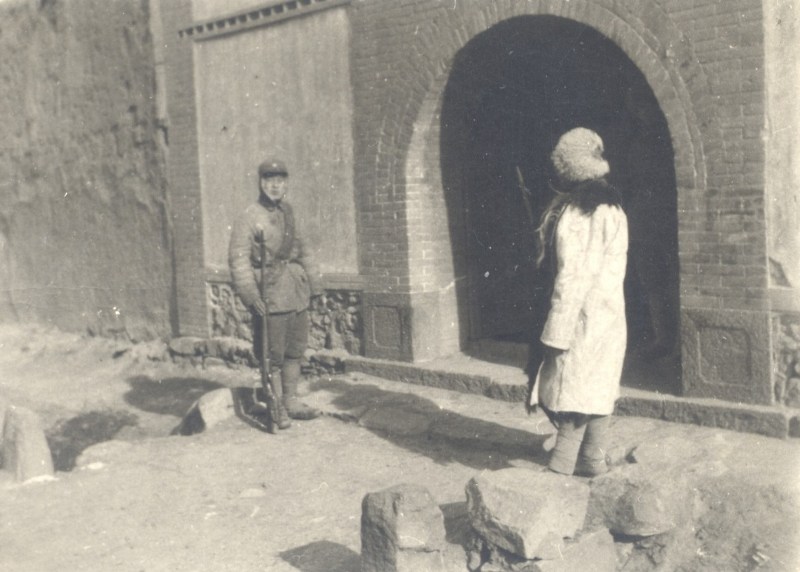
|
This village, with its tall utility poles, seems cold and close to abandoned. Is it?
Two people to the right are visible. And what’s the writing on the wall?
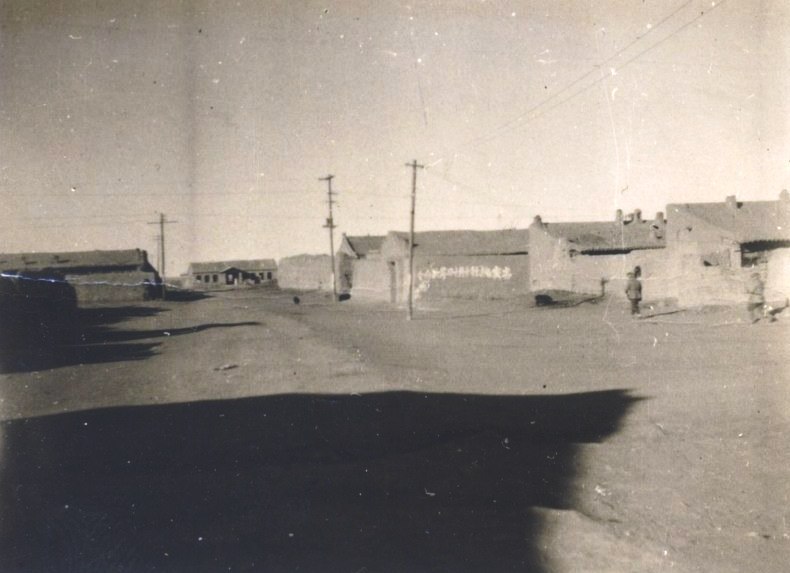
|
I would say from the hat that this is a Mongolian man. Long shadows.
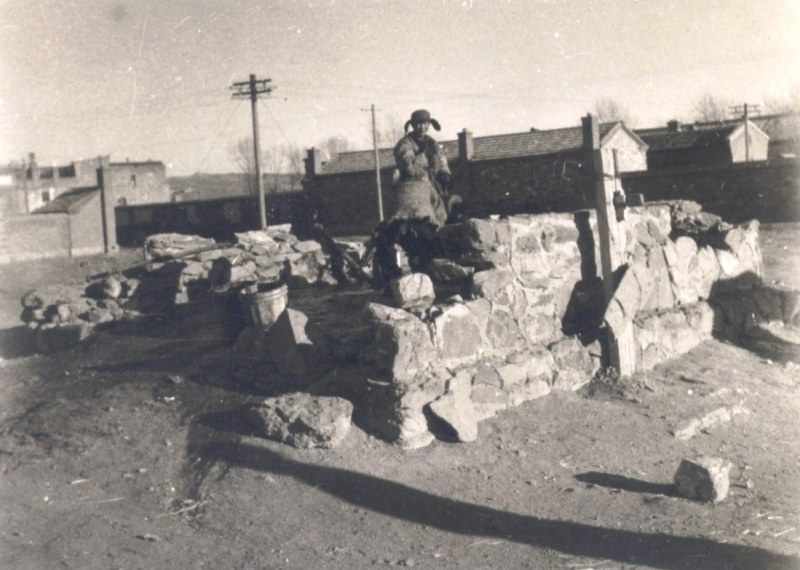
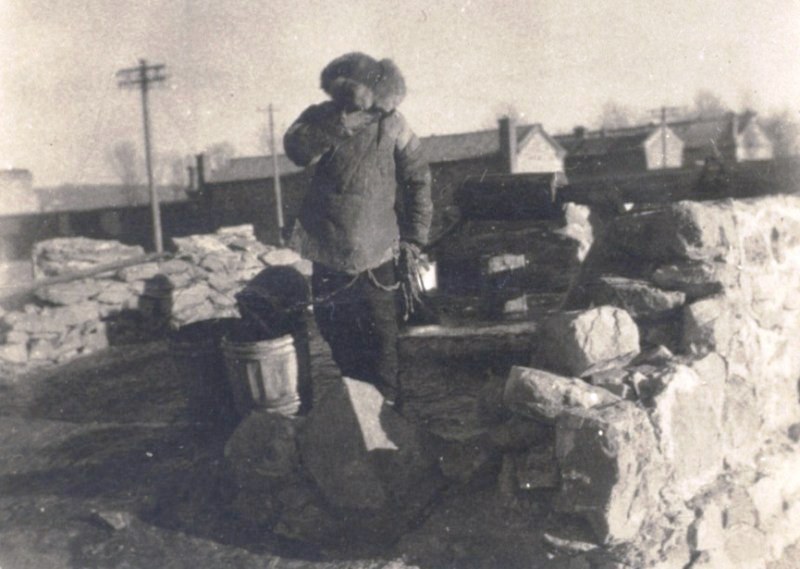
|
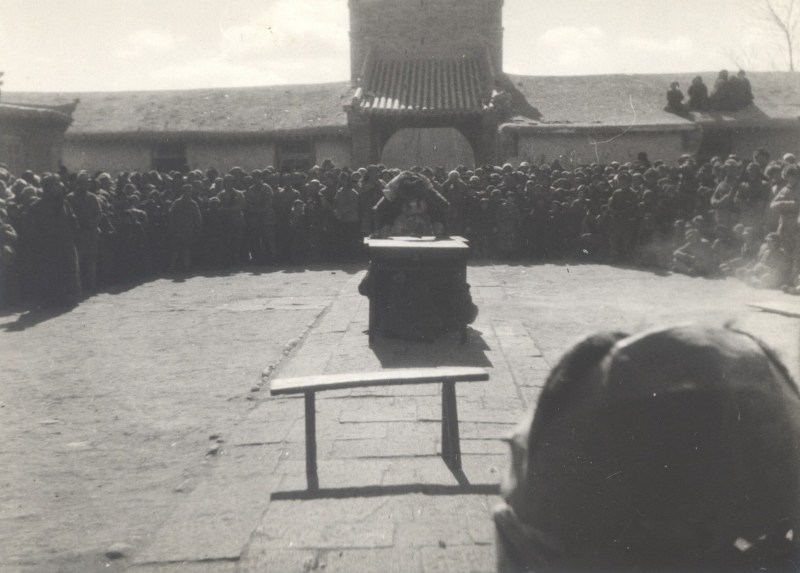
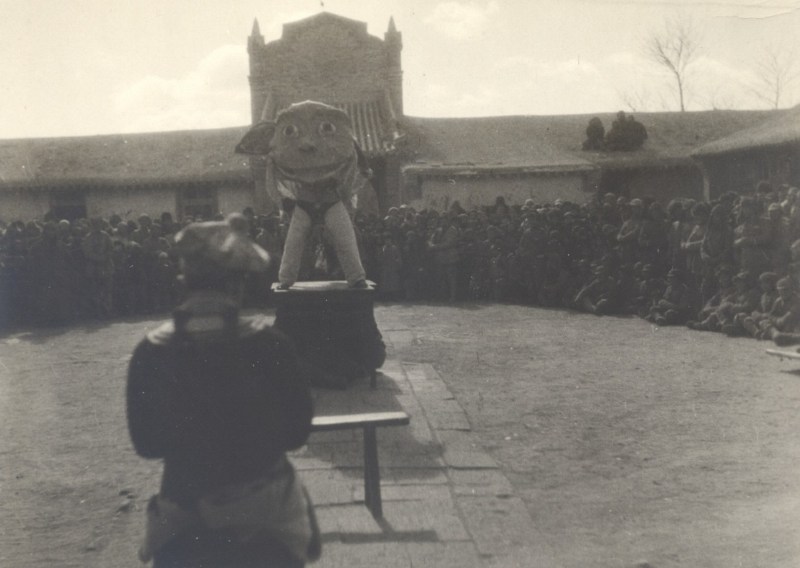
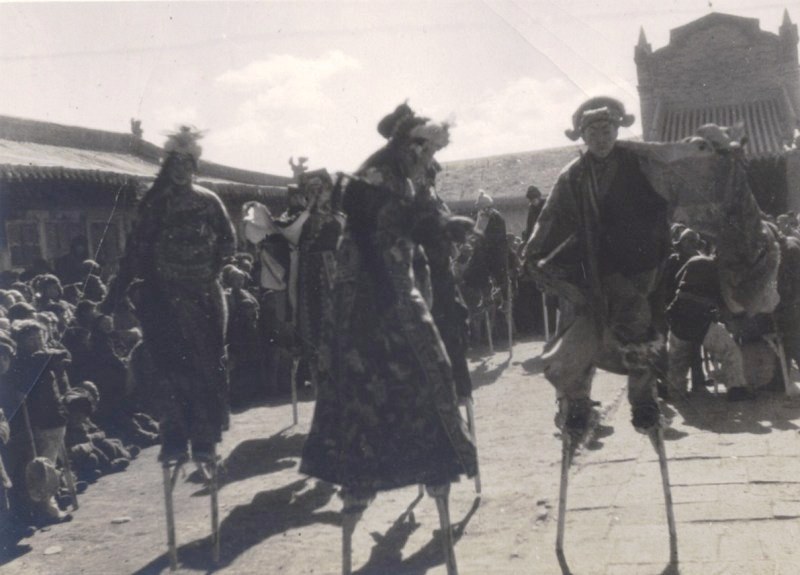
And some entertainment, exact location unidentified:
(Celebrating the end of the war?)
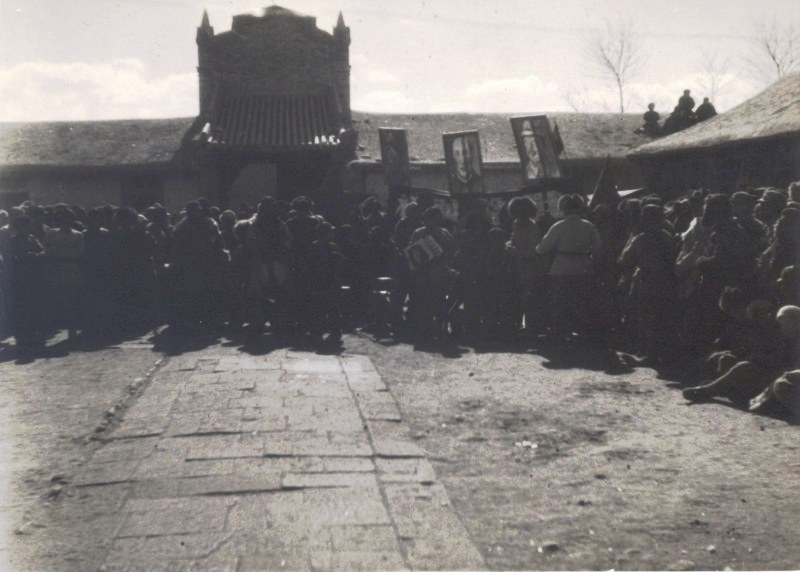
|
The stilt-dancers, a dance popular in Manchuko the formerly puppet state of Russia/Japan;
it bordered and was located to the east of Inner Mongolia.
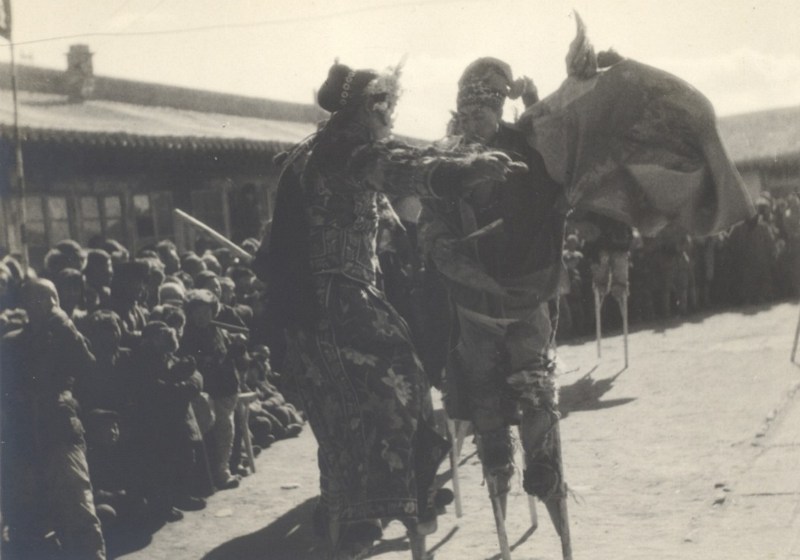
|
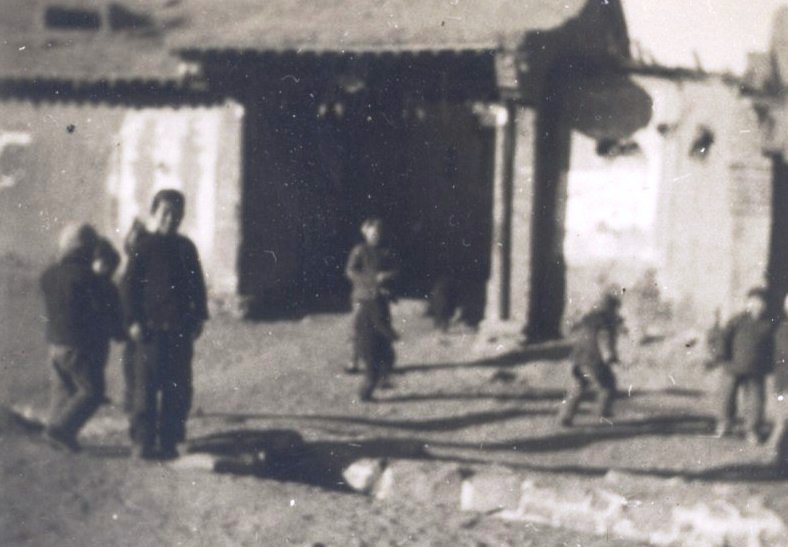
Poverty outside the city walls.
|
On Feb. 3, 1945, the week-long Yalta Conference occurred, in which Stalin, FDR and PM Winston Churchill promised to allow the people of Europe "to create democratic institutions of their own choice".
On August 6, 1945, the U.S. dropped an atomic bomb on Hiroshima, and three days later, one on Nagasaki. At midnight August 9th, the Soviets under Stalin, and who had signed a "Mutual Aid Protocol" also known as the “Soviet-Mongolian Mutual Assistance Pact” with the People’s Republic of Mongolia in 1936 which pledged mutual support against an aggressor, launched an invasion code-named “Operation August Storm” of the Japanese puppet states of Manchukuo and Manchuria and Mengjiang in Inner Mongolia. Some Mongolian forces fought alongside the Soviet Army in the 1945 invasion.
On August 9, the U.S. dropped an atomic bomb on Nagasaki. The following day, the Mongolian People’s Republic declared war on Japan in support of the Soviets, a move to secure its own independence and prove its loyalty to the Allied cause. On August 15, 1945, Japan’s Emperor Hirohito surrendered by means of a radio announcement. Japan formally surrendered on September 2.
On September 20, 1945, General Marshall said, “We will not hold any man in the service for whom there is not a useful job…It took some time for the American troops to be returned to the U.S. This slow demobilization itself was the subject of Congressional hearings. (His enlistment terms indicated “Enlistment for the duration of the War or other emergency, plus six months, subject to the discretion of the President or otherwise according to law.”
Six months later, in 1946, my dad was in Assam, India, waiting to return to the U.S.
|
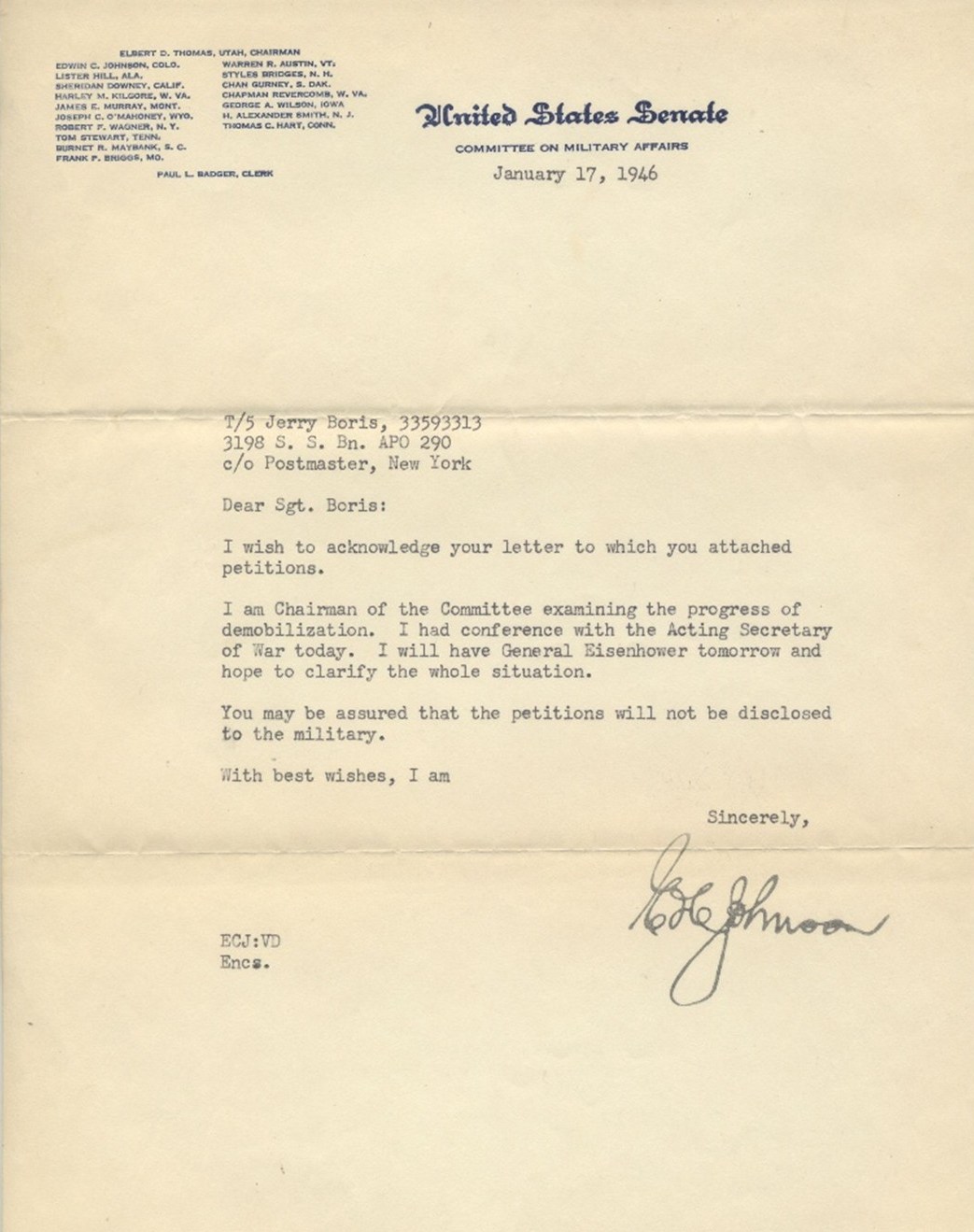
In January 1946, while Senator Ed. C. Johnson (Colorado), Chair of the Military Affairs Committee, was addressing the controversy of demobilization, and my dad wrote to Sen. Johnson in support of his advocacy. On January 17, my dad received the letter at left back from Sen. Johnson.
CLICK ON THE LETTER TO EXPAND
“This guy was a very nice guy. I don’t know if his name was “Falwell or something like that…”
-
“I think this is Irv Corby. He was a wiz!”
“That’s when I learned they’re wonderful cooks They served us about a 25-course meal as their guests.”
“Don’t they look good! Nothin’ like youth!”
Dad was discharged in January 1945 and arrived back in the USA in March 1946, to
re-enter civilian life.
|
|
Jerome Marvin ‘Jerry’ Boris
U.S. Army 3198th Signal Service Battalion
China-Burma-India Theater of World War II
TOP OF PAGE
ABOUT THIS PAGE
CONTACT US
BATTALION PHOTO
LETTER OF COMMENDATION
SENATOR’S LETTER
SERIES OF 3 PHOTOS
AIR NAVIGATION ORDER
SACO CAMPS & UNITS
HENRY HEIMLICH OF SACO
CHINA-BURMA-INDIA THEATER
COPYRIGHT © 2025 Jane Hanser
Internet Adaptation by Carl W. Weidenburner
|
https://cbi-theater.com/boris/index.html
|
|